Sustainability stopped being a marketing adjective long ago—it is a way of inhabiting the territory. At Don Diego, that idea is not a list of good intentions: it is expressed in a layout that reads the land as it always was—a landscape with an agricultural vocation—and projects it forward with an integrated environmental vision.
The development is organized around four components with their own identity—Club Residencial, Organic Farm & Flowers, Wellness Center, and Presa de la Cantera—but they share one principle: to live with the water, the land, and what the land produces, instead of pushing them to the background.
The productive landscape
Organic Farm & Flowers restores the logic of a field that feeds the project again. Organic orchards, fruit trees, and seasonal flowers are not just scenery: they are real cycles that keep the ecosystem alive year-round. The idea is simple and powerful: a community more connected to what is planted, harvested, and brought to the table, with fewer intermediaries and more awareness of origin.
That philosophy is reinforced by greenhouses, walking paths, and bike lanes that invite you to walk the production up close—the same spirit behind workshops and experiences around cultivation—so sustainability is lived, not only declared.
Water, vegetation, and climate
In a highland region with distinct seasons, landscape design cannot ignore the local climate. Planting and maintenance criteria aim to align with the environment: species that handle the Bajío sun well, efficient irrigation, and a reading of the soil that avoids generic solutions imported from other climates.
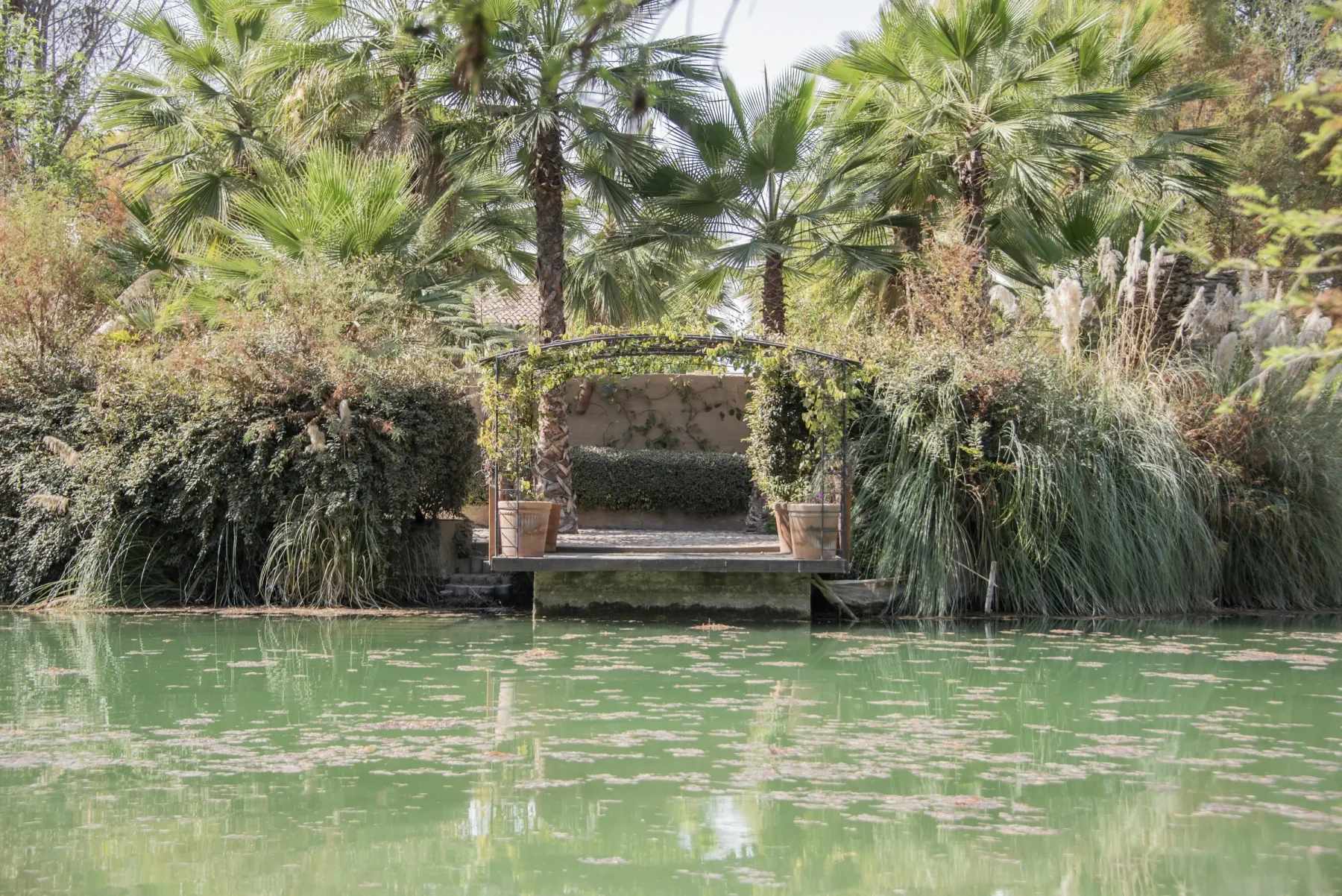
Presa de la Cantera and the surrounding water environment are not decorative backdrops: they are part of the same system. The development engages with that mirror of water as part of a shared ecosystem—a reminder that responsible luxury also means caring for the relationship with the resource and the landscape around it.
A club that respects the territory
In the Club Residencial, sustainability shows in how common spaces, circulation, and landscape are arranged. It is not “green” as a final layer, but a master plan with environmental vision: routes that favor calm coexistence, views that open the horizon toward the field, and materials that age gracefully under the sun.
In daily life, that vision intersects with the project’s organic production: fresh food and cycles from the soil that bring wellness closer to the everyday—from the kitchen to the habits of those who live here.
Toward a community that measures the invisible
Looking ahead, Don Diego invests in practices that are almost common sense in high-end projects today, but here they have a name: reducing food-system footprint by shortening chains, encouraging composting and organic reuse in the agricultural circuit, and ongoing education—talks, shared harvests, gatherings around the orchard—so sustainability becomes a collective habit.
It does not promise a perfect world; it proposes one coherent with the place: less extractive, more relational. A habitat where luxury does not compete with the land, but learns to measure itself against it.
In short: sustainability at Don Diego is a system—landscape, water, cultivation, and community—that strengthens every time someone walks the orchard, watches the reservoir at dusk, or takes home what yesterday was still in the soil.